
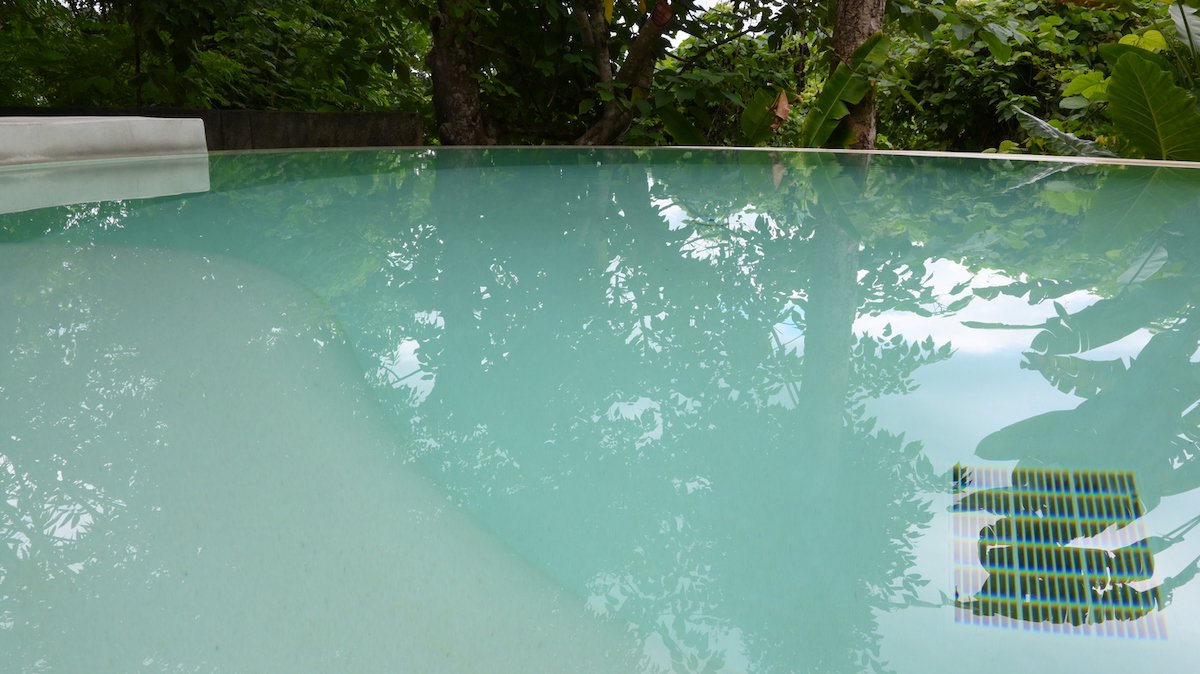
Cloudy pool water is one of the most common late-summer problems in Northeast Florida. A pool can look perfect on Friday, host a busy weekend of swimmers, take on an afternoon thunderstorm, and look dull or milky by Monday morning. The good news is that cloudy water is usually easier to correct than a full algae bloom, especially when you address it before the water turns green.
The fastest fix depends on the cause. Adding more chemicals without testing can make the problem worse, so start by looking at what changed in the last few days and follow the troubleshooting order below.
First, Is Cloudy Water Safe for Swimming?
Do not swim if you cannot clearly see the main drain or the deepest point of the pool. Poor visibility makes it harder to spot a swimmer who is in trouble, and cloudiness can also signal low sanitizer or contamination. Keep everyone out until the water is clear and your chlorine and pH are back in the proper range.
What Cloudy Pool Water Usually Means
Cloudiness is caused by tiny suspended particles that are too small to settle or too numerous for the filter to remove quickly. Those particles may be pollen, sunscreen, dust, dead algae, minerals, or organic debris. The appearance offers a useful clue:
- Dull blue water often points to early filtration or circulation trouble.
- Milky white water can come from high pH, high calcium hardness, or chemicals that were added too close together.
- Blue-green haze may be the beginning of an algae bloom, even before the walls feel slippery.
- Cloudiness after a storm or pool party usually means the chlorine demand suddenly exceeded the sanitizer available.
Cause 1: The Filter Is Not Keeping Up
Your filter removes the particles that make water look cloudy. If the pump is not running long enough, the filter is dirty, or circulation is weak, those particles remain suspended no matter how balanced the water is.
Check the pressure gauge against the clean starting pressure for your filter. A reading roughly 8 to 10 PSI above that baseline usually means it is time to backwash or clean the cartridge. Empty the skimmer and pump baskets, confirm the return jets have steady flow, and look for air bubbles in the pump basket that could indicate a suction-side air leak.
Quick fix: Clean or backwash the filter, brush the walls and floor, and run the pump continuously for 24 hours. During Florida's hottest months, many pools need 8 to 12 hours of circulation every day even when the water looks clear.
Cause 2: Chlorine Is Low or Being Used Up Too Fast
Chlorine does more than kill algae. It also oxidizes sweat, sunscreen, body oils, pollen, and other contaminants. A busy swimming weekend can consume the available chlorine in hours. So can several inches of stormwater and yard runoff.
Test both free chlorine and combined chlorine. A strong chlorine smell does not necessarily mean there is too much chlorine. It often comes from chloramines, which form when chlorine has already reacted with contaminants and needs to be refreshed.
Quick fix: Adjust pH first, then shock the pool at dusk so sunlight does not immediately burn off the treatment. Brush the pool and keep the filter running overnight. Follow the dosage on your product and account for your pool volume rather than guessing.
Cause 3: The pH or Alkalinity Is Out of Range
Chlorine works less effectively when pH climbs too high. High pH can also cause dissolved calcium to come out of solution, creating a milky haze. Low or unstable alkalinity makes pH swing rapidly, so a pool that tests correctly one day may be far out of range after a storm.
Aim for a pH around 7.2 to 7.6 while clearing cloudy water, with total alkalinity generally between 80 and 120 parts per million. Exact targets can vary with the sanitizer system and pool surface.
Quick fix: Correct alkalinity first, then pH, then chlorine. Make one adjustment at a time and allow the water to circulate before retesting. Dumping several products in together can create more cloudiness or cause scaling.
Cause 4: Pollen, Rain, and Florida Storm Runoff
Late summer gives local pools a difficult combination: airborne pollen, heavy rain, windblown debris, warm water, and frequent power interruptions. Rain itself is not dirty, but it dilutes sanitizer and changes pH. Runoff can carry soil, fertilizer, mulch, and algae spores from the deck or yard into the pool.
Quick fix: Skim and brush first, clean the filter, test the full water balance, and restore sanitizer. If storms are expected, preparing ahead can reduce the cleanup. Our guide to preparing your pool for a Florida hurricane explains the same process for larger weather events.
Cause 5: Early Algae Growth
Algae does not always begin as obviously green water. The first signs may be a faint haze, slippery steps, or walls that feel slick when brushed. Warm water and low chlorine allow the bloom to grow quickly, so waiting a few days can turn a simple cleanup into a full recovery.
Quick fix: Brush every surface, especially shaded corners and steps, shock at dusk, and filter continuously. If the water becomes distinctly green or you lose visibility to the bottom, follow our green pool recovery guide or call for professional treatment.
Should You Use Clarifier or Flocculant?
Pool clarifier binds very fine particles into larger clusters that the filter can catch. It can help after chemistry and filtration problems have already been corrected, but more is not better. Overdosing can make the water cloudier and gum up the filter.
Flocculant makes particles fall to the floor so they can be vacuumed to waste. It is a more aggressive option and is not suitable for every filter or plumbing setup. Because it requires careful vacuuming and sends a significant amount of water out of the pool, we do not recommend using it as a first response.
A 24-Hour Cloudy Water Checklist
- Keep swimmers out if the bottom is not clearly visible.
- Test chlorine, pH, alkalinity, stabilizer, and calcium hardness.
- Empty baskets and clean or backwash the filter if pressure is high.
- Brush the walls, steps, corners, and floor.
- Correct alkalinity and pH before adding sanitizer.
- Shock at dusk if chlorine is low or algae is suspected.
- Run the pump continuously and retest the next morning.
When to Call Southern Oasis
Call for help if the water is not noticeably clearer after 24 to 48 hours, the filter pressure keeps climbing, chemistry readings will not hold, or you cannot see the bottom. Those symptoms can indicate a filter problem, severe contamination, high stabilizer, or a developing algae bloom that needs more than a basic shock.
Our one-time pool cleaning service can diagnose and correct a cloudy-water episode, while ongoing pool cleaning helps prevent it through weekly testing, brushing, filtration checks, and chemical balancing.
Need clear water back quickly? Call (904) 361-1372 or use our contact page to request a visit.