
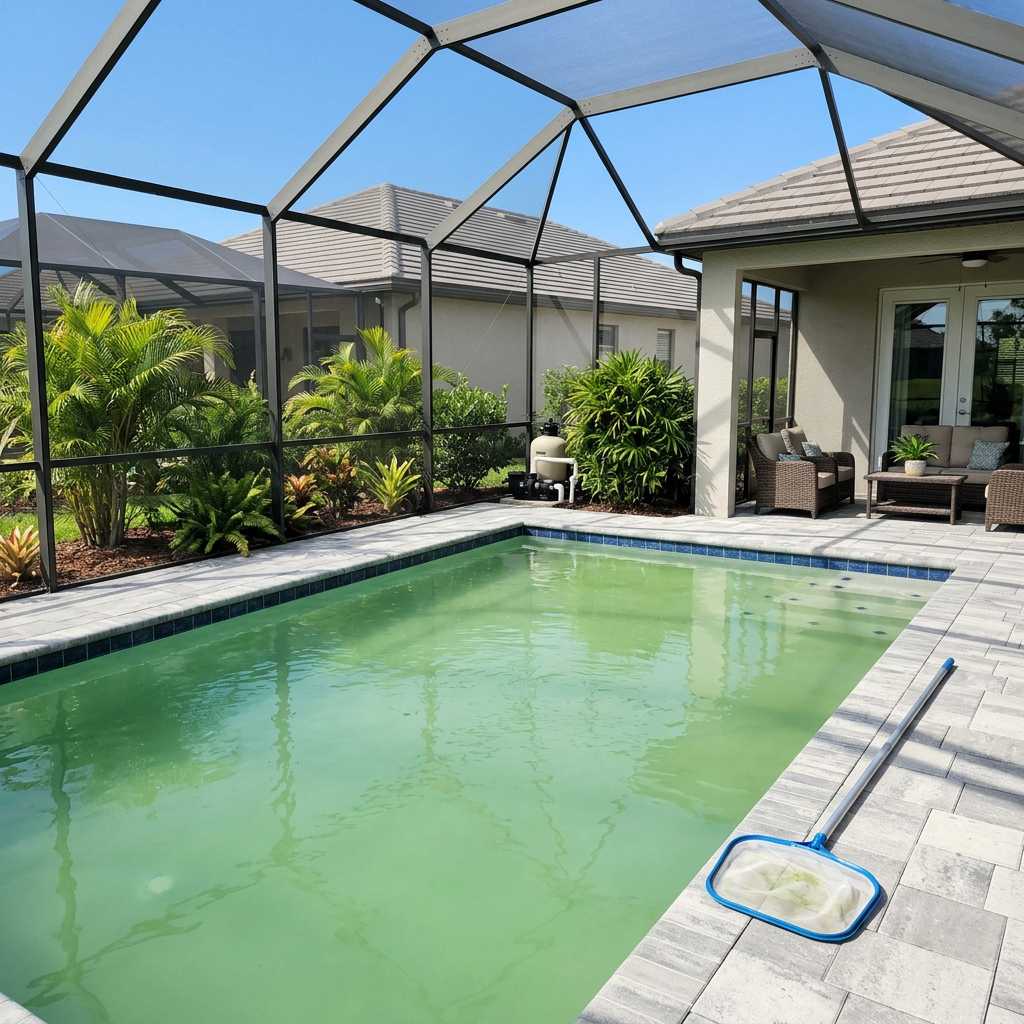
It happens fast. You skip a week of skimming during a stretch of 90-degree days, an afternoon thunderstorm rolls through, and by the weekend your pool looks less like a backyard oasis and more like a pond. If you're staring at green water right now, you're not alone. Mid-summer is peak season for algae blooms in St. Augustine, and we get more green pool recovery calls in July and August than the rest of the year combined.
Why Florida Pools Turn Green So Fast
Algae is always present in pool water in trace amounts. What turns a few harmless cells into a full bloom is the combination our summers serve up daily: water temperatures in the upper 80s, long hours of intense sunlight, and afternoon rain that dilutes your chlorine and washes organic debris into the water. Chlorine also burns off much faster in heat and UV, so a pool that held its sanitizer just fine in March can lose most of it in a single July afternoon.
That's why a pool can go from clear to cloudy to green in as little as 48 to 72 hours. Once the bloom takes hold, the algae multiplies faster than a normal dose of chlorine can kill it, and the pool gets greener by the day.
What You Can Try Yourself First
If the water is lightly green and you can still see the bottom, DIY recovery is realistic. The essentials:
- Test before you treat. Check chlorine, pH, and stabilizer (CYA). If pH is high, shock will be far less effective, so bring it down to around 7.2 first.
- Shock heavily, at dusk. A green pool needs several times the normal dose, and sunlight burns off chlorine before it can work. Evening treatment gives it all night to kill the bloom.
- Run the pump around the clock. Your filter, not the chemicals, is what actually removes dead algae. Plan on running it 24 hours a day until the water clears.
- Brush everything. Algae clings to walls, steps, and corners where chemicals can't reach it. Brush daily during recovery.
When DIY Isn't Enough
There's a point where more chlorine stops being the answer. Call in a professional if:
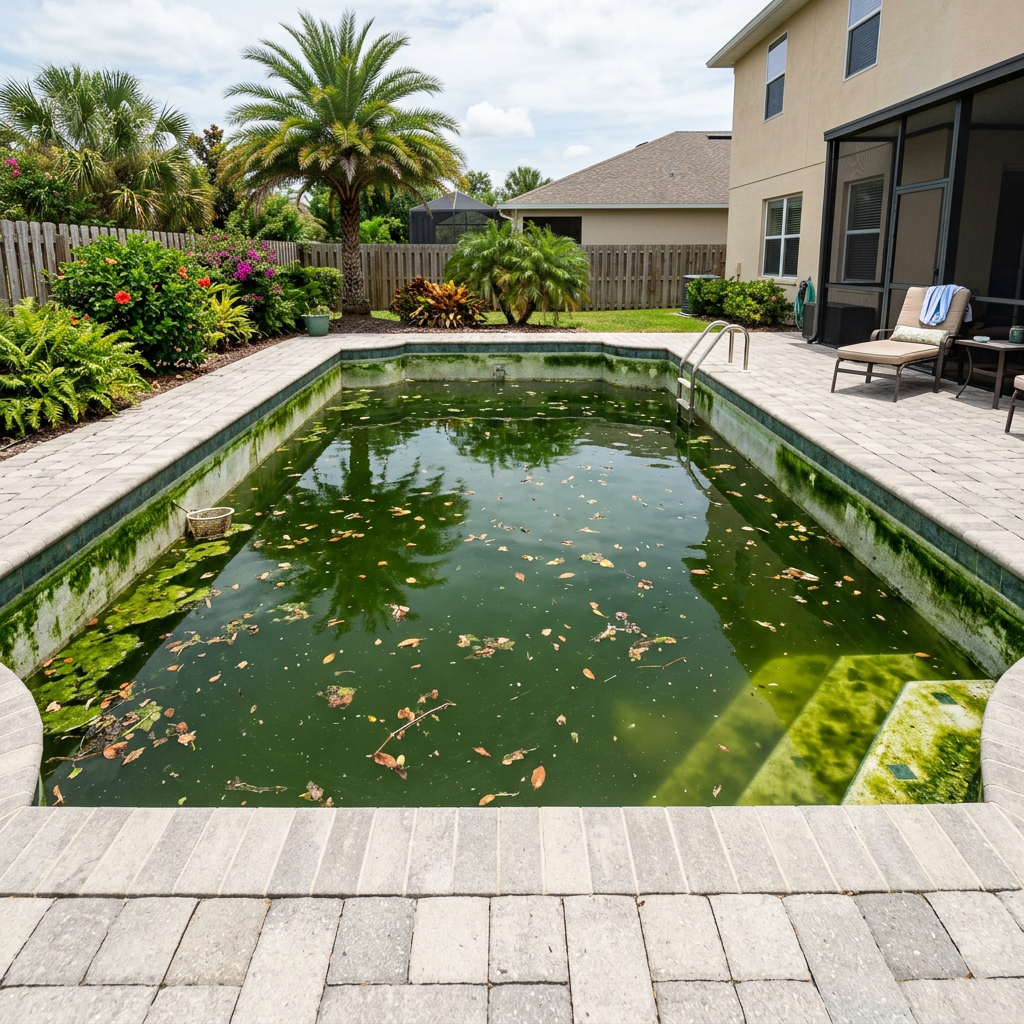
- You can't see the bottom step. That means the bloom is too dense for a standard shock-and-filter cycle.
- The water has been green for more than a week or two, which usually means stains, clogged filter media, and stubborn algae strains.
- You've shocked twice and it's still green, which is often a sign of high stabilizer levels or mustard/black algae that shrugs off normal chlorine.
- The pump or filter isn't working properly. Without circulation, no amount of chemistry will save the pool.
One thing we tell every homeowner: don't drain the pool. In Northeast Florida's high water table, an empty pool shell can literally float out of the ground. Nearly every green pool, even a black-bottom swamp, can be recovered in place with the right chemicals, heavy filtration, and a few days of patience. That's exactly what our green-to-clean process is built around, and it's one of several specialty pool services we offer when a pool needs more than routine care.
Keeping It from Happening Again
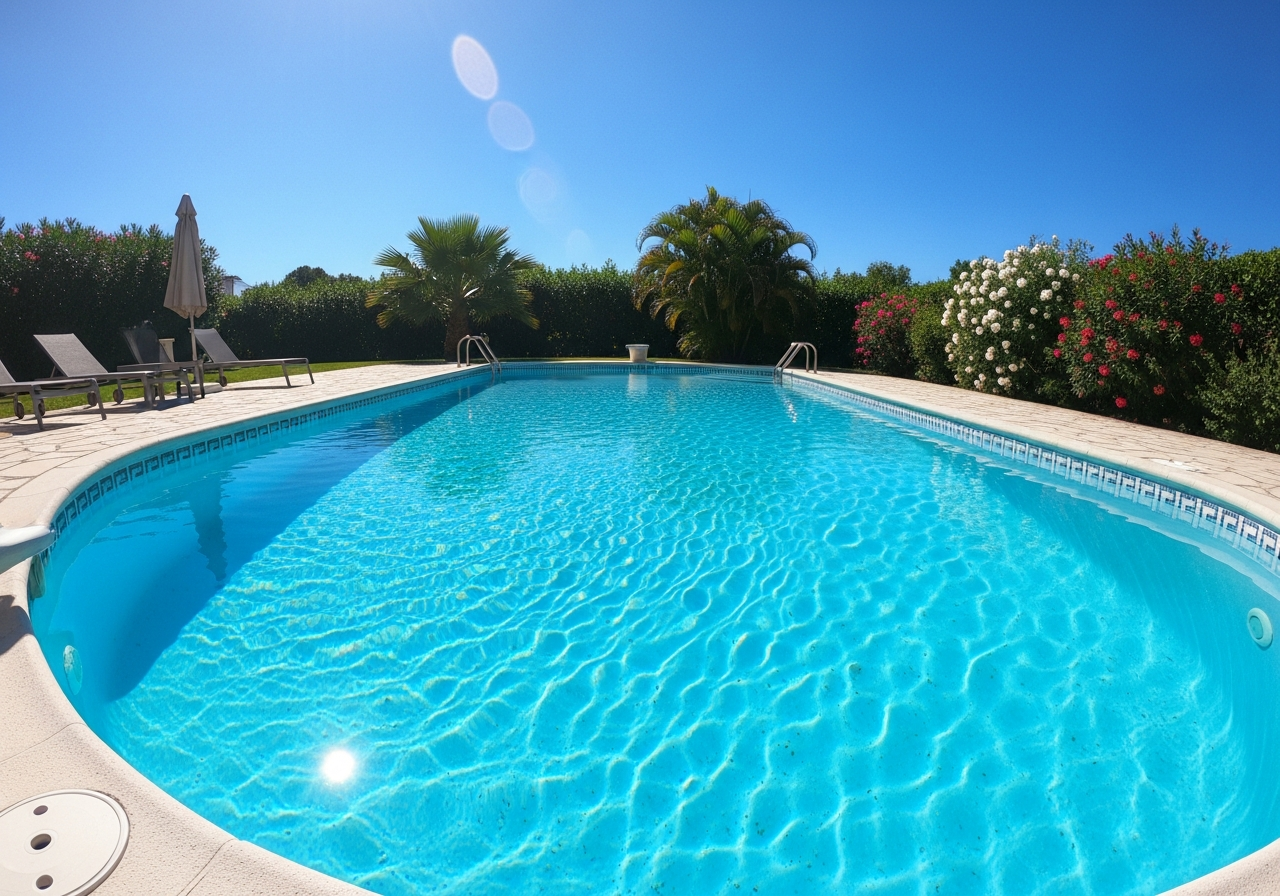
Every green pool has the same root cause: sanitizer and circulation fell behind faster than anyone noticed. In summer, that margin is thin. Test the water twice a week, keep the pump running at least 8 to 10 hours a day, and empty skimmer baskets after every storm.
Or let someone else watch the margin for you. Our ongoing pool cleaning plans exist largely because of Florida summers. A weekly visit with professional testing and brushing is the single most reliable way to make sure you never meet the green pool problem in the first place.
Already staring at green water? Send us a photo through our contact page or call (904) 361-1372 and we'll tell you honestly whether it's a DIY job or one for us.